World Heritage Museums & Galleries
Discover the permanent collections of humanity's most celebrated museums. Every artwork is preserved in ultra-resolution scans up to 300 DPI, licensed under CC0 Public Domain.
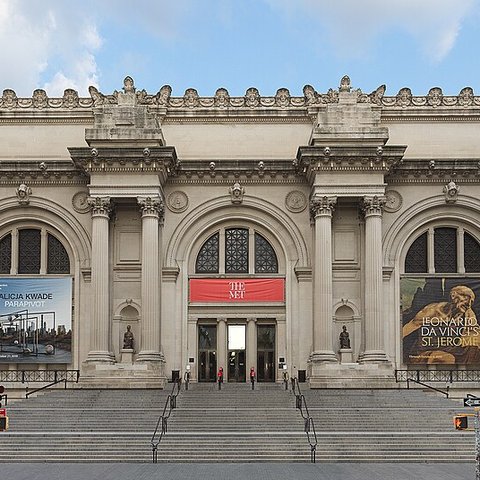
The Metropolitan Museum of Art
The largest art museum in the Americas, housing over 5,000 years of global culture and world-renowned European painting galleries along Fifth Avenue.
Global artistic heritage spanning classical antiquity, European Old Masters, American masterworks, and landmark Open Access digital archives.
- 1870:Founded by American civic leaders, merchants, and artists to establish a museum of world caliber.
- 1880:Opens its landmark neo-classical Fifth Avenue building at Central Park.
- 1961:Acquires Rembrandt's 'Aristotle with a Bust of Homer' for an unprecedented .3 million.
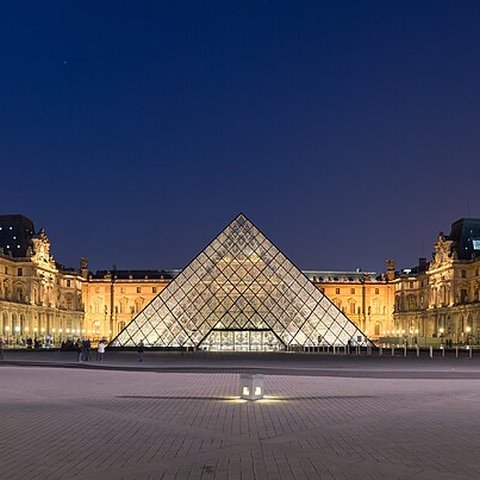
Musée du Louvre
The historic palace of French royalty and the most visited museum in the world, holding the greatest collection of classical Renaissance and Romantic painting.
Western painting from the Middle Ages to 1848, royal French collections, Italian High Renaissance, and monumental French Romanticism.
- 1190:Built originally as a medieval fortress under King Philippe Auguste.
- 1793:Inaugurated as a public national museum during the French Revolution with 537 paintings.
- 1989:Grand Louvre expansion inaugurated with I. M. Pei's monumental glass pyramid.
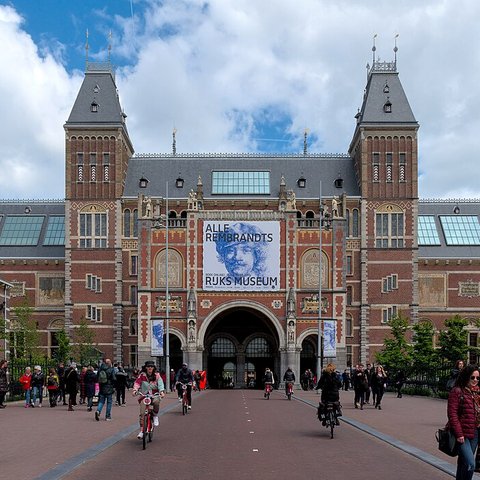
Rijksmuseum Amsterdam
Het Rijksmuseum
The national museum of the Netherlands dedicated to Dutch history and the golden zenith of 17th-century Northern European painting.
The Dutch Golden Age, world-supreme collections of Rembrandt van Rijn, Johannes Vermeer, Frans Hals, and Jan Steen.
- 1800:Founded in The Hague as the National Art Gallery inspired by the French Louvre.
- 1885:Relocates to Pierre Cuypers' grand purpose-built neo-Renaissance palace in Amsterdam.
- 2012:Pioneers the Rijksstudio open data initiative, releasing hundreds of thousands of raw TIFFs.
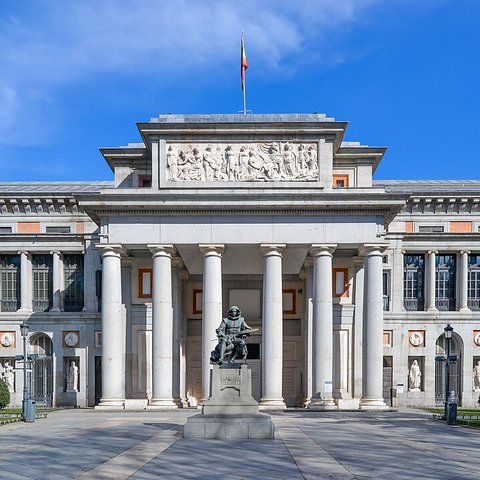
Museo Nacional del Prado
Museo del Prado
Spain's premier national art museum, revered worldwide for the most comprehensive collections of Diego Velázquez, Francisco Goya, and Hieronymus Bosch.
Spanish Golden Age, Flemish masters collected by the Spanish crown, Titian and the Venetian school, and Goya's complete artistic evolution.
- 1819:Opened by King Ferdinand VII and Queen María Isabel of Braganza as the Royal Museum of Paintings.
- 1868:Nationalized following the Glorious Revolution, officially renamed the Museo Nacional del Prado.
- 2007:Inaugurates the Rafael Moneo extension, increasing gallery and conservation space by 50%.
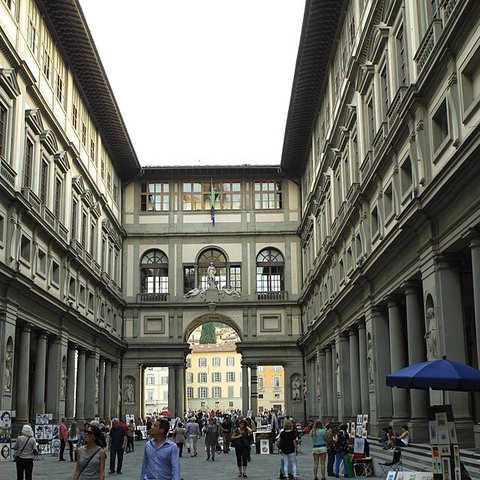
Le Gallerie degli Uffizi
Galleria degli Uffizi
The cradle of the Italian Renaissance. Originally built by the Medici dynasty, holding the crowning achievements of Botticelli, Leonardo, Michelangelo, and Raphael.
Florentine and Tuscan Renaissance, the Medici family patrimony, Italian High Renaissance, and early Baroque masterworks.
- 1560:Cosimo I de' Medici commissions Giorgio Vasari to design administrative offices (uffizi).
- 1581:Grand Duke Francesco I converts the top floor into a private Medici art gallery.
- 1743:Anna Maria Luisa de' Medici signs the Family Pact, ensuring the collection remains in Florence forever.
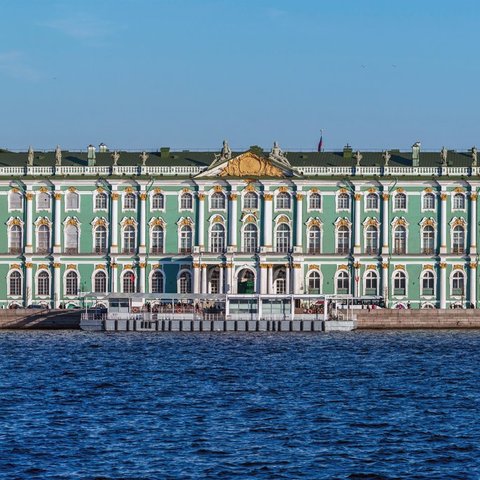
The State Hermitage Museum
Государственный Эрмитаж
One of the world's grandest and most legendary cultural palaces, founded in 1764 by Empress Catherine the Great. Spanning the monumental Winter Palace, it preserves an incomparable imperial assembly of European Old Masters.
Imperial collections of Italian Renaissance, Dutch and Flemish Golden Age (world-renowned Rembrandt, Rubens, and Van Dyck galleries), Spanish masters, and French Neoclassicism.
- 1764:Founded by Empress Catherine the Great through the acquisition of 225 Old Master paintings from Johann Ernst Gotzkowsky.
- 1852:Emperor Nicholas I opens the New Hermitage designed by Leo von Klenze as the first public art museum of the Empire.
- 1917:Proclaimed a state national museum following the Russian Revolution; imperial palace complex unified.
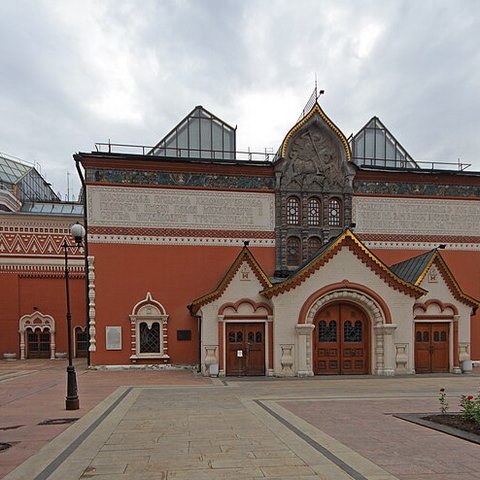
State Tretyakov Gallery
Государственная Третьяковская галерея
The premier national treasury of Russian fine art in the world, founded in 1856 by Moscow industrialist and patron of arts Pavel Mikhailovich Tretyakov.
Masterpieces of Russian painting from 12th-century spiritual icons to 19th-century Realism, Romanticism, and the monumental canvases of the Peredvizhniki (Wanderers).
- 1856:Pavel Tretyakov purchases his first paintings by Russian artists, founding the gallery.
- 1892:Tretyakov donates his entire assembly of over 2,000 masterpieces to the city of Moscow.
- 1918:Declared national property of the Russian Soviet Republic by state decree.
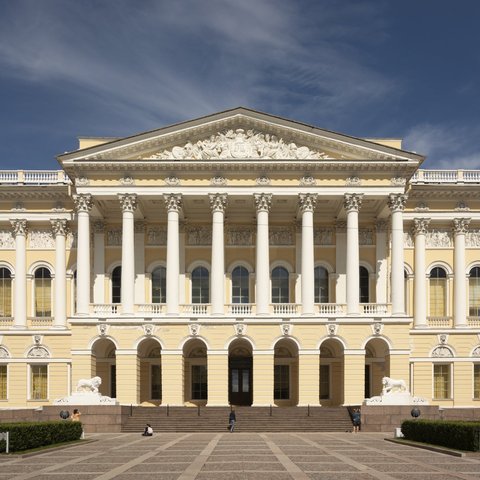
State Russian Museum
Государственный Русский музей
The world's largest and most comprehensive museum dedicated entirely to Russian art, housed in the magnificent Neoclassical Mikhailovsky Palace designed by Carlo Rossi.
Complete spectrum of Russian visual culture, monumental academic canvases, Ivan Aivazovsky's oceanic tempests, and Karl Bryullov's Roman masterpieces.
- 1895:Established by decree of Emperor Nicholas II in memory of Emperor Alexander III.
- 1898:Grand public opening with masterworks transferred from the Hermitage, Winter Palace, and Academy of Arts.
- 1992:Designated an Especially Valuable Object of Cultural Heritage of the peoples of the Russian Federation.