The Canonical Masters
From the polymaths of the High Renaissance to the masters of Tenebrism and Romanticism. Explore digitized oeuvres with high-resolution deep zoom.
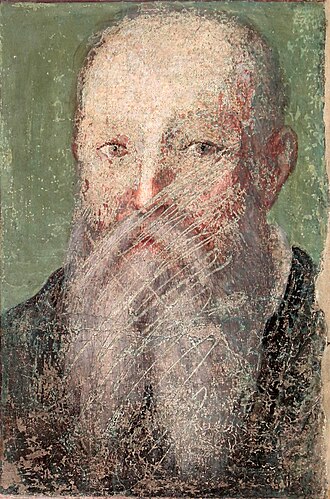
Agnolo Bronzino
Agnolo di Cosimo, known as Bronzino, was an Italian Mannerist painter from Florence. His sobriquet, Bronzino, in all probability referred to his dark skin or reddish hair. He lived all his life in Florence, and from his late 30s was much employed as the court painter of Cosimo I de' Medici, Grand Duke of Tuscany. Bronzino was mainly a portraitist but also painted many religious subjects and a few allegorical subjects, including what is perhaps his best-known work, Venus, Cupid, Folly and Time (c. 1545). His portraits of the Duke, his wife Eleonora of Toledo, and their children are famed for their impassive, aristocratic reserve, porcelain-smooth skin textures, and dazzling, meticulously rendered fabrics that epitomize the Mannerist aesthetic. Bronzino's cool, detached elegance and supreme linear precision exercised a lasting influence on European court portraiture for generations.
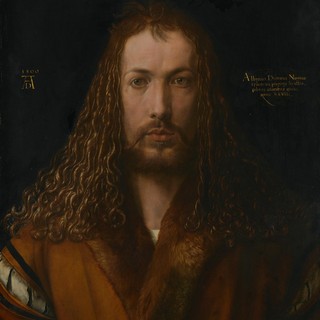
Albrecht Dürer
Albrecht Dürer was a German painter, printmaker, and theorist of the German Renaissance. Born in Nuremberg, Dürer established his reputation and influence across Europe in his twenties due to his high-quality woodcut prints. He was in communication with the major Italian artists of his day, including Raphael, Giovanni Bellini, and Leonardo da Vinci, and from 1512 was patronized by Emperor Maximilian I. Dürer's vast body of work includes engravings, his preferred technique in his later prints, altarpieces, portraits and self-portraits, watercolors and books. His woodcuts, such as the Apocalypse series (1498), are more gothic than the rest of his work. His celebrated engravings include the Knight, Death and the Devil (1513), Saint Jerome in His Study (1514) and Melencolia I (1514), which has been the subject of extensive analysis and interpretation. His watercolours also mark him as one of the first European landscape artists, while his ambitious woodcuts revolutionized the potential of that medium. Through his mastery of perspective and proportions, Dürer brought the humanistic ideals of the Italian Renaissance into Northern European art, leaving an indelible legacy.
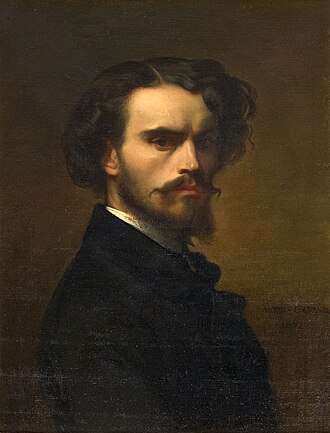
Alexandre Cabanel
Alexandre Cabanel was a French painter born in Montpellier who became one of the foremost academic masters of the Second Empire. He painted historical, classical, and religious subjects in the academic style. Cabanel entered the École des Beaux-Arts in Paris at age seventeen, studying under François-Édouard Picot, and won the prestigious Prix de Rome in 1845. His sensational canvas The Birth of Venus (1863) was purchased directly by Emperor Napoleon III at the Paris Salon, cementing his status as the darling of official French culture. Beyond mythological subjects, Cabanel achieved legendary status with his dark, psychologically intense masterpiece The Fallen Angel (1847), portraying Lucifer with tears of wrath and wounded pride, captured in monumental anatomical perfection. As a professor at the École des Beaux-Arts and a multiple winner of the Grande Médaille d'Honneur, Cabanel trained generations of prominent European and American painters.
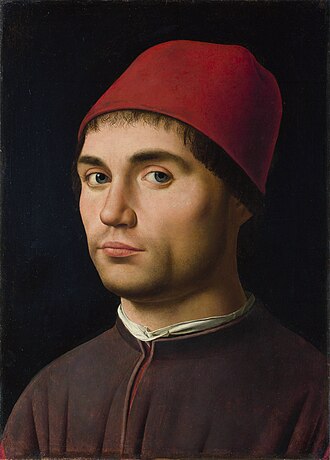
Antonello da Messina
Antonello da Messina was a pioneering Sicilian painter of the Italian Renaissance. He is celebrated for introducing Early Netherlandish oil painting techniques to Italian art and revolutionizing the portrait genre. Apprenticed in Naples under Colantonio, where he encountered Flemish and Spanish art, Antonello mastered the nuanced translucency of oil glazes long before his central Italian contemporaries. During his stay in Venice in 1475–1476, his revolutionary San Cassiano Altarpiece transformed Venetian painting, profoundly influencing Giovanni Bellini. His portraits, typically in three-quarters view against dark backgrounds—such as Portrait of a Man (Il Condottiere)—exhibit a mesmerizing psychological intensity and uncanny tactile realism. Antonello's Virgin Annunciate (Palermo) remains one of the quietest yet most profound religious icons of world art, holding the viewer in suspended devotional awe.
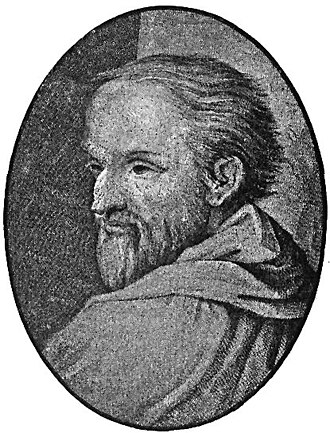
Antonio da Correggio
Antonio Allegri da Correggio was the foremost painter of the Parma school of the Italian Renaissance, whose daring, sensuous style prefigured the dramatic dynamics of 17th-century Baroque art. Working largely in Parma, Correggio developed a revolutionary approach to illusionistic ceiling painting. His frescoes in the dome of the Parma Cathedral, depicting the Assumption of the Virgin, utilized daring di sotto in sù foreshortening and spiraling clouds of figures that seemed to break through the solid architectural masonry into celestial infinity. His mythological series commissioned by Federico II Gonzaga—including Jupiter and Io and Leda and the Swan—showcase a soft, vaporous sfumato and rapturous sensuality unmatched in Renaissance art. Correggio's mastery of radiant light and tender emotional intimacy profoundly inspired later titans like Annibale Carracci, Bernini, and the French Rococo masters.
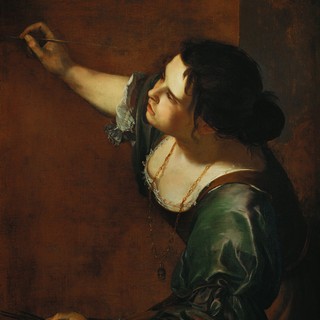
Artemisia Gentileschi
Artemisia Gentileschi was an Italian Baroque painter, today considered one of the most accomplished seventeenth-century artists working in the dramatic manner of Caravaggio. In an era when female artists were rarely accepted by the artistic community or patrons, she was the first woman to become a member of the Accademia di Arte del Disegno in Florence. She specialized in painting scenes of women from myths and the Bible, portraying them not as passive victims, but as courageous, defiant, and physically powerful figures. Gentileschi's best-known work, Judith Slaying Holofernes (1614–1620), displays a visceral realism and violent intensity rarely matched by her male contemporaries. Her mastery of tenebrism, using extreme contrast of light and darkness, heightened the psychological tension and theatrical drama of her narratives. Despite surviving personal trauma and societal resistance, she earned prestigious commissions across Rome, Florence, Venice, and Naples, as well as the English court of Charles I. Today her oeuvre stands as a monumental triumph of Baroque realism and female heroism.
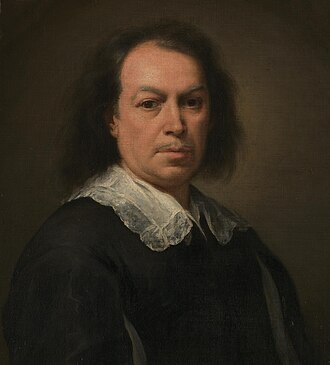
Bartolomé Esteban Murillo
Bartolomé Esteban Murillo was a Spanish Baroque painter who, alongside Velázquez and Zurbarán, defined the golden age of Sevillian art. Although best known for his religious works, he also produced numerous lively paintings of contemporary street life. Murillo spent most of his life in Seville, where he founded the prestigious Academia de Bellas Artes in 1660 and served as its first president. His religious canvases, particularly his iconic depictions of the Immaculate Conception, are celebrated for their luminous golden aura, vaporous atmosphere (estilo vaporoso), and tender, approachable piety. In his secular genre paintings, such as The Beggar Boys and Two Women at a Window, Murillo captured the charm, dignity, and daily reality of common Seville with acute psychological sympathy. Throughout the 18th and early 19th centuries, Murillo was arguably the most famous and internationally coveted Spanish master in Europe.
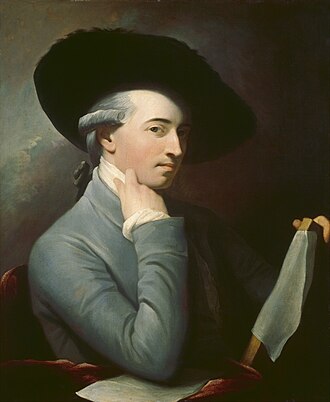
Benjamin West
Benjamin West was an American-born British painter of historical scenes around and after the time of the American War of Independence. He was the second president of the Royal Academy in London, serving from 1792 until his death in 1820. Born in Pennsylvania, West traveled to Italy in 1760 to absorb classical antiquity and High Renaissance masters before settling permanently in London. His landmark painting The Death of General Wolfe (1770) shattered academic convention by depicting a modern military tragedy in contemporary attire rather than classical Greek or Roman togas, establishing modern history painting. King George III became his greatest patron, commissioning monumental historical and biblical canvases for Windsor Castle and St George's Chapel. West's London studio served as the welcoming artistic nursery for generations of pioneering American artists, including John Singleton Copley, Gilbert Stuart, and Charles Willson Peale.
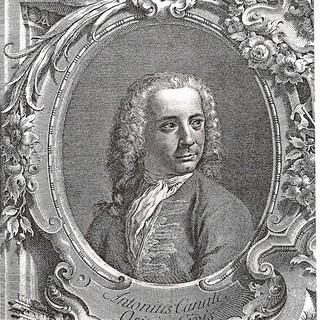
Canaletto (Giovanni Antonio Canal)
Canaletto, born Giovanni Antonio Canal, was an Italian painter of cityscapes or vedute of Venice, Rome, and London. He was also an important printmaker in etching. Trained initially by his father as a theatrical scene painter, Canaletto visited Rome in 1719, where he was inspired by Giovanni Paolo Panini to turn toward topographical landscape painting. Upon returning to Venice, he began capturing the distinctive light, architectural splendor, and bustling waters of the Venetian canals with unparalleled precision. Between 1746 and 1756 he worked in England, where he produced numerous views of London and the residences of his aristocratic patrons. His works are celebrated for their meticulous topographical truth, radiant aquatic reflections, and atmospheric luminosity, often achieved through sophisticated camera obscura studies. His sweeping panoramas of the Grand Canal, Saint Mark's Basin, and the Doge's Palace defined the international vision of Venice during the Grand Tour era and remain cornerstones of major museum collections worldwide.
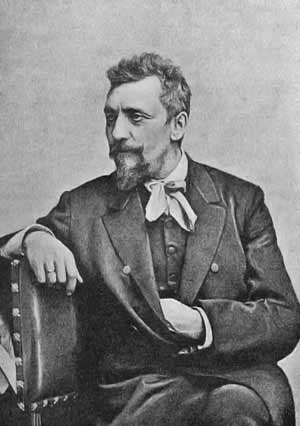
Carl Heinrich Bloch
Carl Heinrich Bloch was a Danish painter known for his historical and religious masterworks, particularly his monumental series on the life of Christ created for the chapel at Frederiksborg Castle. Bloch studied at the Royal Danish Academy of Art under Wilhelm Marstrand before spending eight formative years in Italy, where he absorbed the deep chiaroscuro of Rembrandt and the psychological nobility of the Italian Renaissance. His early breakthrough, Prometheus Bound (1864), announced a master of tragic drama and intense anatomical power. Between 1865 and 1879, brewer J.C. Jacobsen commissioned Bloch to paint 23 scenes from the Life of Christ for Frederiksborg. These paintings, celebrated for their radiant clarity, emotional tenderness, and profound spiritual reverence, have become some of the most widely reproduced Christian imagery in the modern world. Bloch's mastery of chiaroscuro and human warmth earned him a lasting place as Denmark's greatest 19th-century religious painter.
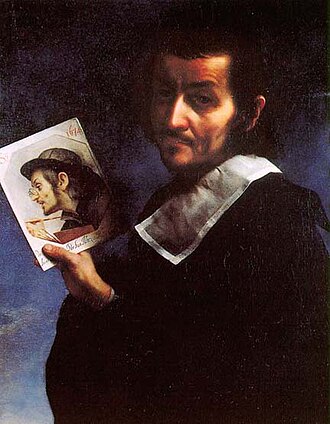
Carlo Dolci
Carlo Dolci was an Italian painter of the Baroque period, active mainly in Florence, known for highly finished religious pictures, often repeated in several versions. A child prodigy entering the studio of Jacopo Vignali at age nine, Dolci developed an extraordinarily meticulous technique, applying glazes with hair-thin brushes until the surface resembled lustrous porcelain or enamel. A deeply devout Catholic, he resolved to paint only religious subjects that would inspire pious contemplation in the viewer. His depictions of Saint Cecilia, Mary Magdalene, and the Mater Dolorosa are distinguished by their rich, luminous ultramarine robes—using precious crushed lapis lazuli—and sweet, melancholic expressions of devotional ecstasy. Dolci was intensely favored by the Medici grand dukes and aristocratic collectors across Europe for his gem-like craftsmanship.
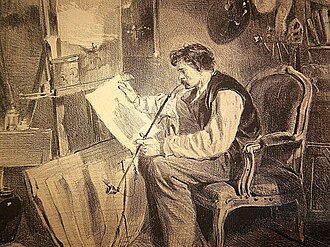
Clément-Auguste Andrieux
Clément-Auguste Andrieux was a French painter, draftsman, and lithographer renowned for his unsparing, realistic depictions of military history and the Franco-Prussian War. Studying at the École des Beaux-Arts in Paris under Michel Martin Drolling, Andrieux developed an acute observational eye and a refusal to romanticize battlefield violence. He debuted at the Paris Salon in 1850 and gained widespread acclaim for documenting the Battle of Magenta and the siege operations of the 1870 war. Unlike traditional academic battle painters who glorified commanders, Andrieux focused on the exhaustion, cold, smoke, and gritty resilience of rank-and-file soldiers in winter trenches. His illustrations for literary classics, including the works of Victor Hugo and Cervantes, reflect his deep narrative gravitas and mastery of graphic contrast.